Vedanta literally means “the end of the Vedas”. The Vedas are the world’s most ancient scriptures – spiritual knowledge passed down through generations of sages. The final part of these sacred texts is called the Upanishads, and their profound teachings form the heart of Vedanta philosophy. These truths have not only inspired yogis in India, but also great Western thinkers like Arthur Schopenhauer.
Vedanta answers life’s most important questions:
Who am I?
What is the purpose of life?
Is there something beyond this world of change and suffering?
Contents
What is the Philosophy of Vedanta?
Vedanta is one of the six classical schools of Indian philosophy. Its core message is simple but powerful:
Your true nature is pure Consciousness – infinite, free, and one with all.
This wisdom is known as non-duality (Advaita): the idea that there is only One Reality, not two. That One Reality is called Brahman – Absolute Existence.
Vedanta teaches that:
The world as we normally see it is shaped by illusion (Maya).
What we take to be “me” – the body, the mind, the personality – is not who we really are.
Behind all this, there is a deeper truth: we are not separate, but one with the eternal Self.
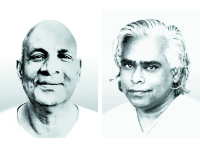
The Great Philosopher Sankaracharya
Sri Sankaracharya lived around 1,200 years ago and is the most important teacher of Vedanta. He helped explain and preserve the ancient wisdom of the Upanishads, making their teachings clear and accessible.
Sankaracharya taught that our true Self is not separate from the Supreme Reality, but one with it. According to his teachings, the feeling of separation comes from illusion (Maya) and mistaken identification with the body and mind. Through knowledge and direct experience, this illusion can be removed, leading to freedom and peace. His work established Vedanta as a living spiritual path focused on Self‑realization.
The Goal of Vedanta: To Realise the Self
Vedanta tells us that liberation (moksha) does not come from rituals, charity, or outer action. It comes through self-knowledge – by recognising that:
“I am not this body. I am not this mind. I am That – the pure, unchanging Self.”
This realisation is not just a theory. It must become a lived experience.
Vedanta invites us to:
Overcome the sense of “I” and “mine”
See beyond labels like name, job, nationality, or religion
Recognise the same Self in all beings
When this is realised, fear and division disappear. We see life as a unity, and we act from compassion and wisdom.
How Can We Reach This State?
Vedanta may seem abstract, but it is also deeply practical. It is not just a belief system – it is a path of inner discovery.
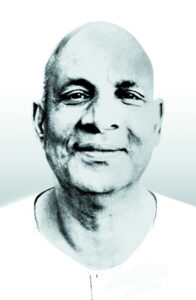
Swami Sivananda, a great modern teacher, once said that Vedanta is the ideal, and Yoga is the means.
Through the practices of yoga, such as:
meditation
self-inquiry
breath control
selfless service
…we purify the mind and slowly uncover our true nature.
Vedantic Meditation
Vedantic meditation is more than a quiet sitting practice – it is a way of inner awareness throughout the day. Based on the teachings of the Upanishads, this form of meditation helps us realize that our true nature is the changeless Self, beyond body and mind. The following methods are commonly used:
Neti-Neti (“not this, not this”): Through this practice of negation, we reject all that is not the Self – body, breath (prana), senses, thoughts – until we arrive at pure consciousness.
Sakshi Bhav (the witness attitude): We learn to observe the mind without reacting, like watching a film. By remaining the witness, the ego gradually dissolves, and inner peace grows.
Japa and meditation on OM: Repetition of the sacred sound OM helps quiet the mind and attune it to the vibration of the Absolute (Brahman).
With regular practice, Vedantic meditation leads to lasting clarity, detachment, and the direct experience of unity with all life.
Why Vedanta Matters Today
In a world full of stress, fear, and confusion, Vedanta reminds us of something eternal, peaceful, and unshakeable – our true Self.
This Self is pure, free, and full of light. It is your essence.
When you know who you truly are, you no longer seek happiness outside – because joy is already within you.