Locust Pose
Home > Yoga > 12 Basic Asanas > Locust
the 12 Basic asanas
Locust Pose: A strengthening backbend that energizes the body and develops willpower.
Locust Pose – Salabhasana is a strengthening backward bend that brings energy, warmth, and vitality to the whole body. Practised after the forward-bending and inverted postures, it helps counterbalance the effects of Shoulderstand, Plough, and Forward Bend by opening the front of the body and giving the spine a strong backward movement.
While Cobra mainly works the upper back, Locust focuses more on the lower back, abdomen, hips, thighs, and legs. It also engages the arms and shoulders, making it a powerful posture for developing strength throughout the back body. Because the pose is entered through one concentrated muscular effort, it requires focus, breath awareness, and determination. For this reason, Locust is traditionally associated not only with physical strength, but also with the development of willpower, perseverance, and mental steadiness.
Practise gradually and without strain. Beginners should first become comfortable with Half Locust before attempting the full version. In the beginning, the legs may lift only a little from the floor; this is normal, and progress comes with regular practice.
After completing the pose, stretch back into Child’s Pose or relax on the front to allow the body and breath to settle.
Strengthens the muscles of the arms, shoulders, abdomen, lower back, thighs, and legs.
Tones the liver, pancreas, and kidneys.
Improves the appetite.
Relieves constipation.
Regular practice relieves back pain and sciatica.
Encourages concentration and perseverance and develops willpower.
Stimulates pranic flow in the lung, stomach, spleen, heart, liver, small intestine, pericardium, and bladder meridians

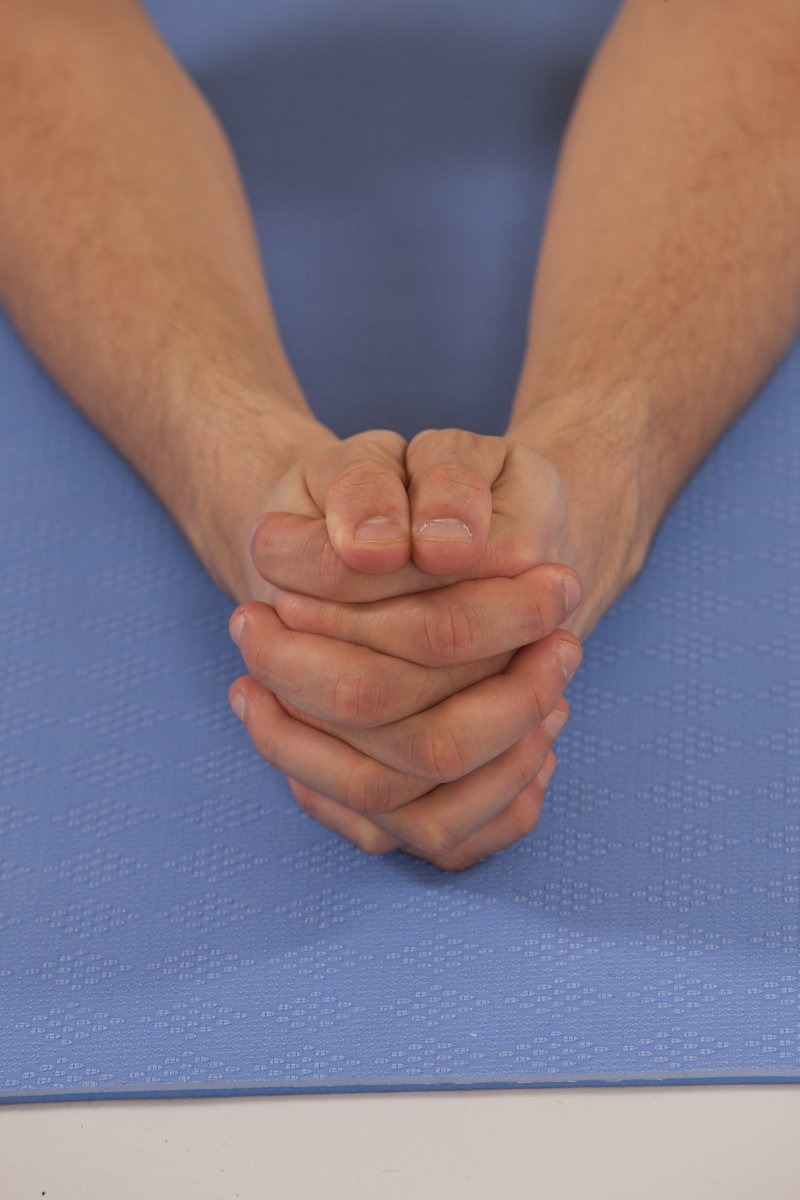
Interlock the fingers and keep the thumbs together.
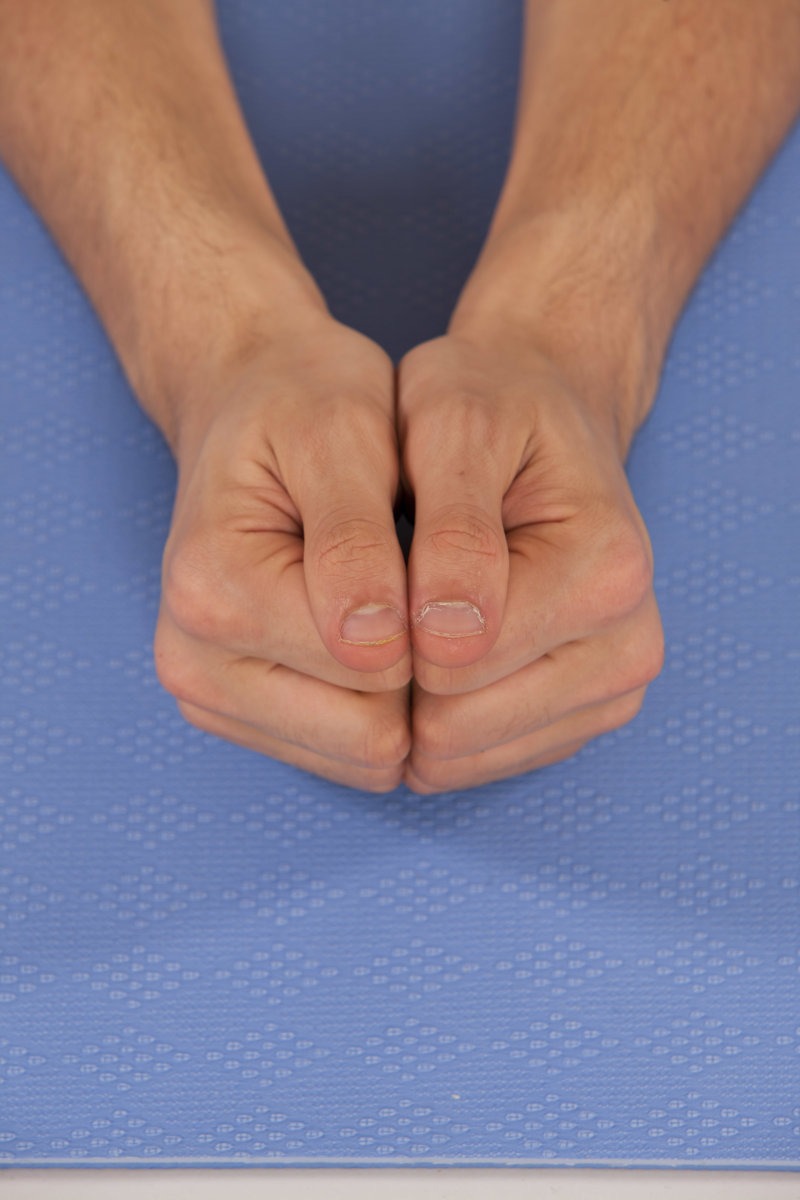
Clench the fists and keep the thumbs together.
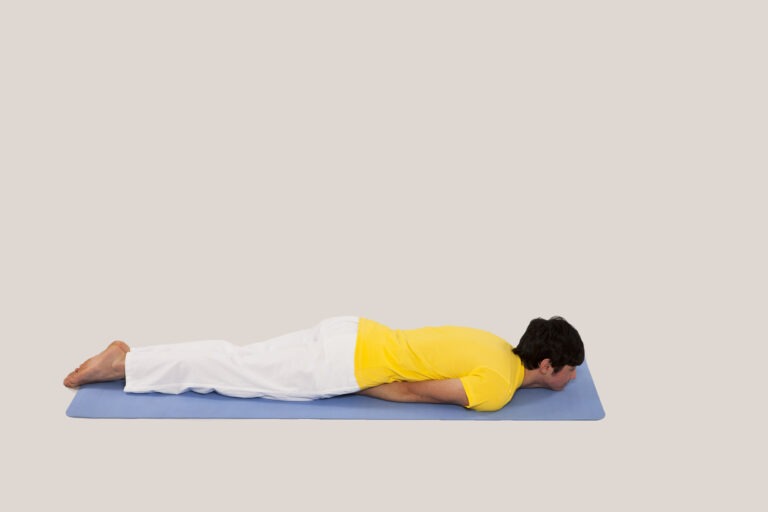
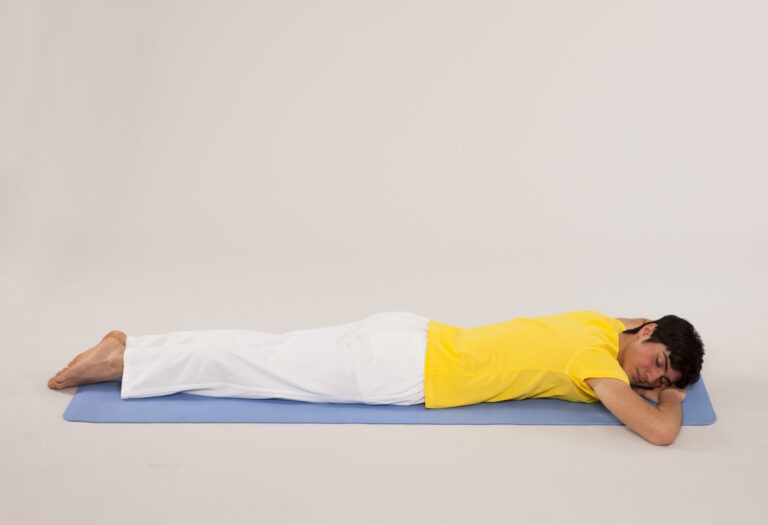
Lie on your abdomen with your legs outstretched, heels together, arms under your body, and chin forward on the mat. Place your hands in one of the hand positions, depending on which you find most comfortable. Hand position A is the classical position for this pose.
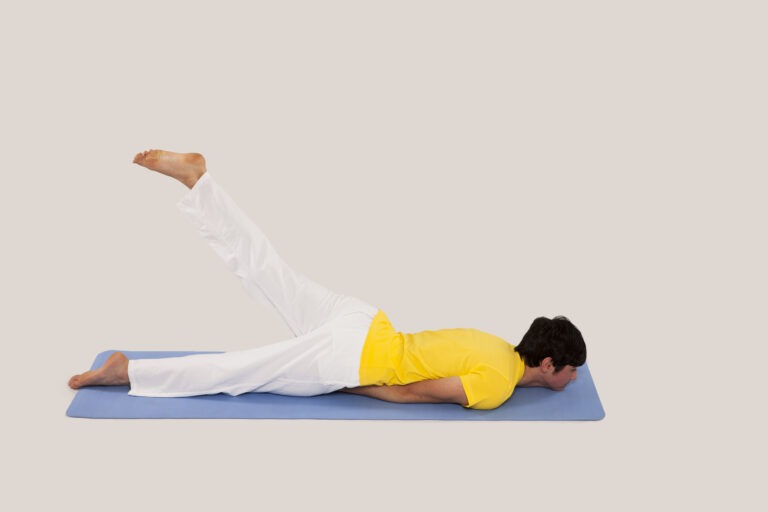
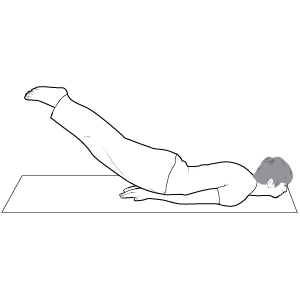
Beginners should move slowly. With a long inhalation, contract your lower back and gradually raise your left leg. Hold your breath and the position as long as it is comfortable. Exhale and lower your leg, then repeat 2 more times. Repeat 3 times on the other side. Continue with Step 3 or relax.
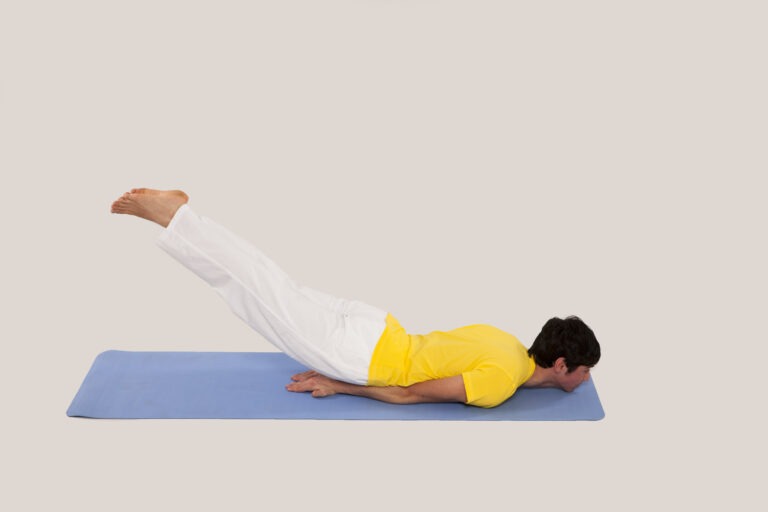
To come into the full pose, on a quick, strong inhalation, contract your lower back, push on your arms, and swing both legs up as high as possible. Hold your breath as long as is comfortable, then exhale and lower your legs. Repeat 2 more times.
Swami Vishnudevananda
Sivananda Yoga Centres