Intermediate Exercises
Home > Yoga > Yoga breathing > Intermediate Breathing Exercises
At the intermediate level of pranayama exercises, the emphasis shifts toward deepening balance, refining the breath, and introducing retention gradually – without strain. Anuloma Viloma (Alternate Nostril Breathing) becomes the central practice here, using retention and ratio work to steady the nervous system and focus the mind. Kapalabhati is introduced as a stronger, purifying technique based on short, active exhalations with passive inhalations, used to stimulate energy and sharpen concentration.The aim of these pranayama breathing exercises is steadiness: a calm nervous system, a centered mind, and a smooth rhythm you can sustain.
Do not perform anuloma viloma with breath retention or kapalabhati when you are pregnant.

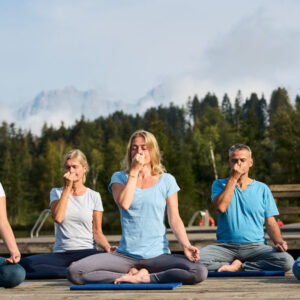
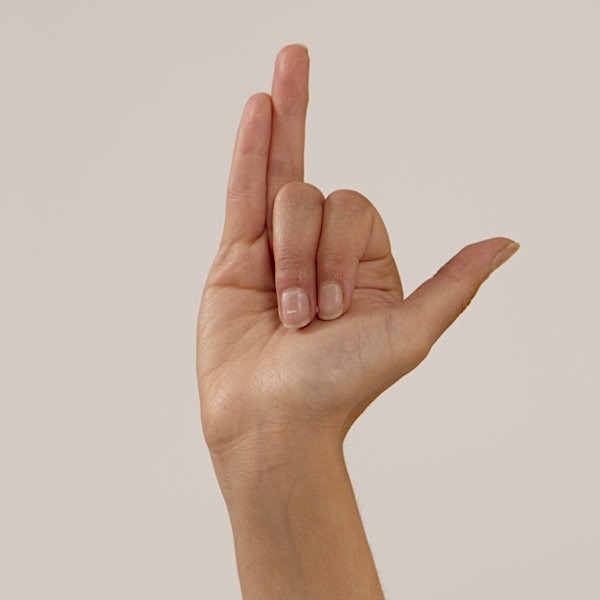
Fold the index and middle fingers toward the palm. Use the thumb to close the right nostril and the ring finger to close the left nostril.

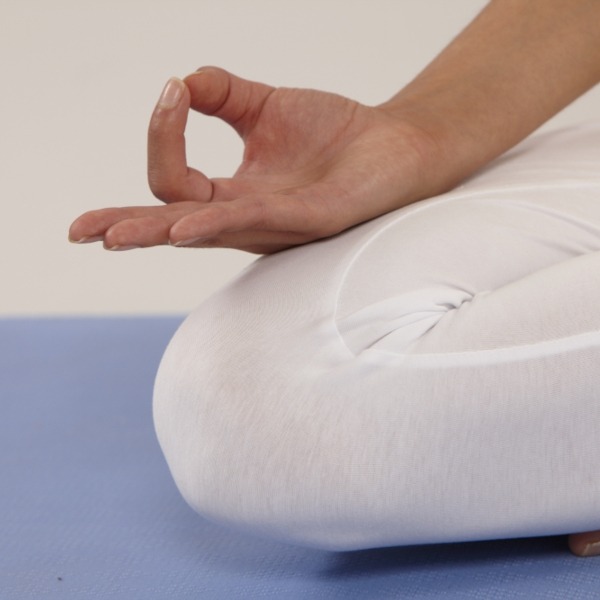
Touch thumb and index finger lightly; keep the other fingers relaxed and extended, resting on the knee.
Start with 3 : 6 : 6 (inhale : hold : exhale).
When that is comfortable, progress to 4 : 8 : 8.
In this pranayama breathing exercise, you increase the period of retention slowly and only when you are fully comfortable. The principle is simple: expand your capacity without strain.
Begin with 3 : 6 : 6.
Then 4 : 8 : 8.
When fully established, increase retention to 3 : 12 : 6 (doubling the hold).
After that becomes steady, progress to 4 : 16 : 8.
Kapalabhati is a stronger, energizing pranayama practice used to purify the respiratory system. It consists of short, active exhalations while inhalations happen passively.
Learn the basic “pumping” action before you increase speed or add longer rounds.
If you’d like personal feedback and a steady rhythm to your practice, consider joining an in-person yoga class at one of our Sivananda Yoga centres, where pranayama breathing techniques can be guided and refined step by step.
You might also consider a yoga retreat, where practicing in a supportive environment can help you deepen your breathwork and overall routine.
If you’d like to practice regularly with support from home, you can also join the online pranayama practice, held three times a week. A typical online session includes:
You can find the schedule and details here.