The Locust Pose

Locust (Salabhasana)

the 12 Basic asanas

Locust

The Locust: Lying face down with lifted legs.

Of all the asanas, Salabhasana or the Locust Pose is the one that works most on developing will power. According to Swami Vishnudevananda, exercising will power makes one’s thoughts pure and powerful and is one of the primary goals of the practice of asanas. Unlike the other asanas which are done slowly, we achieve the Locust by making a single powerful muscle contraction, similar to that of a locust jumping. This action simultaneously brings together thought, breath, movement, and prana – vital energy.

The physical benefits of this pose is that all the internal organs are massaged, especially the pancreas, liver, and kidneys. It also gives a backward bend to the spine and opens the chest, bringing an increased blood supply to the neck and throat region.

Objective

Increases will power and strengthens the lumbar region.

Benefits of Salabhasana

Video – Locust

Step 1 – Face Down

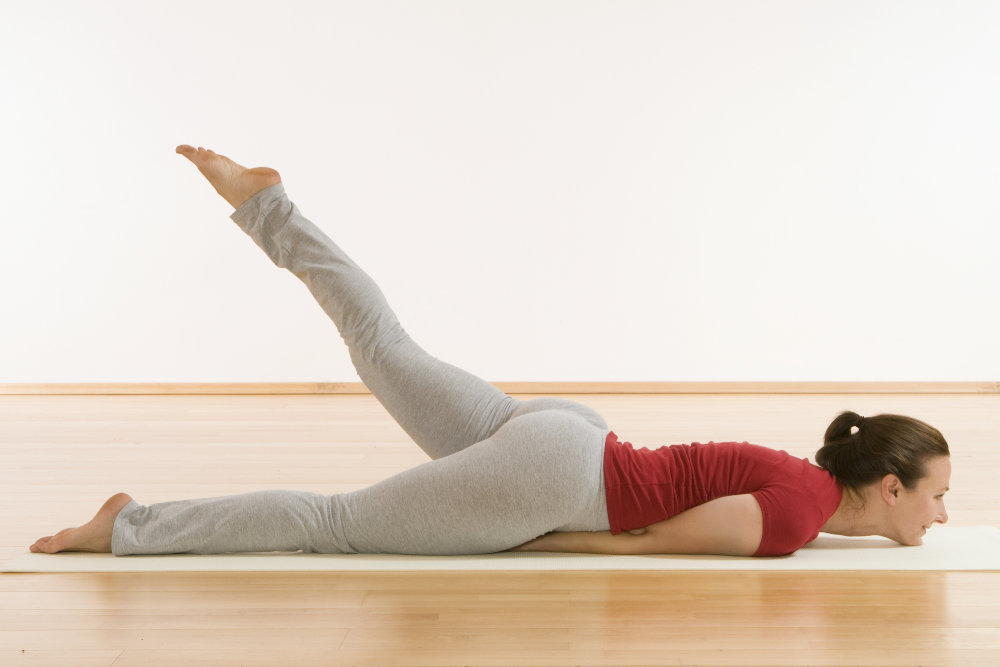
Lie on your front. Rest your chin on the ground, then move it forward as much as you can, so that your throat lies almost flat. Put your arms by your sides, then push your hands under your body, and make them into fists or clasp them together. Bring your elbows as close together as possible.

Step 2 – Half Locust

Half Locust

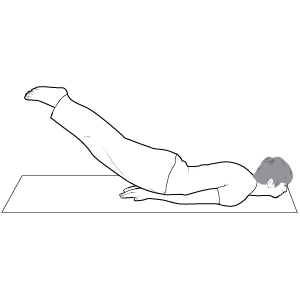
Inhale as you lift one leg. Hold this position for at least 10 seconds, then exhale while lowering your leg and repeat the pose with your other leg. Practice it 3 times on each side.

Chin position

The further forward you push your chin, the more your spine can stretch and the more you will gain from this asana.

Step 3 – Full Locust

Lie with your chin out, as in the Half Locust, then take 3 deep breaths. On the third, lift both legs off the ground. They may not come up far at first, but with practice you may be able to lift them much higher. Hold for as long as you can, then lower your feet. Repeat twice and then relax on your abdomen.

Up and up

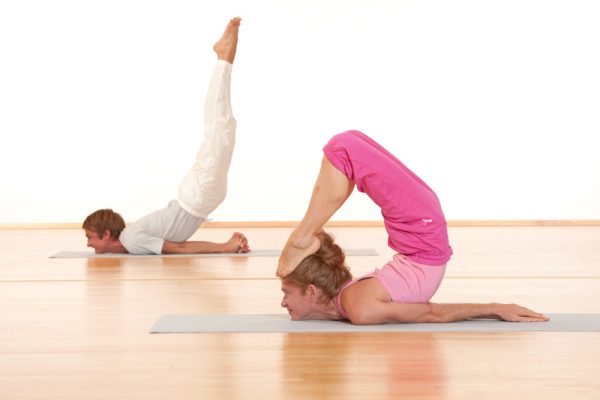
With practice, you will be able to raise your legs higher. Eventually, you may even be able to lift your body vertically.

The Advanced Locust

Advanced locust variations

This more difficult pose must be attempted only by experienced students of yoga. The aim, in the advanced asana, is to raise your feet straight up and then lower them over your head. This backward bend compresses your vertebrae while stretching the front of your body to its greatest extent. The strength and flexibility necessary for this pose will eventually develop with regular practice.

Further Reading

This site is registered on wpml.org as a development site. Switch to a production site key to remove this banner.