Sun Salutation
Home > Yoga > 12 Basic Asanas > Sun Salutation
A graceful sequence of 12 movements, Sun Salutation warms, stretches, and strengthens the whole body while linking each posture to the rhythm of the breath. In the Sivananda tradition, it prepares body and mind for the asanas to follow, while also standing as a complete practice in itself.
Sun Salutation, or Surya Namaskar (“salutation to the Sun”), is traditionally practiced at the beginning of a yoga asana session. It limbers the whole body in preparation for deeper practice and moves the spine through alternating backward and forward bends. This flowing pattern promotes flexibility in the spine and limbs, regulates the breath, and helps gather the mind into the present moment.
Though it is often used as a warm-up, Sun Salutation is more than a preparation. Practiced with awareness, it becomes a complete exercise in itself: energizing, balancing, and centering. The movements stretch and strengthen the major muscle groups, stimulate circulation, increase respiratory capacity, and gently tone the nerves. At the same time, the symmetry and continuity of the sequence encourage concentration and relaxed attention.
Sun Salutation consists of 12 positions performed as one continuous flow. One full round includes two sun salutations or sequences: in the first, the right leg steps back and forward; in the second, the left leg leads. As the body opens and closes, expands and contracts, the breath follows naturally. Backward bends are linked with inhalation, forward bends with exhalation, and the sequence develops a steady internal rhythm over time.

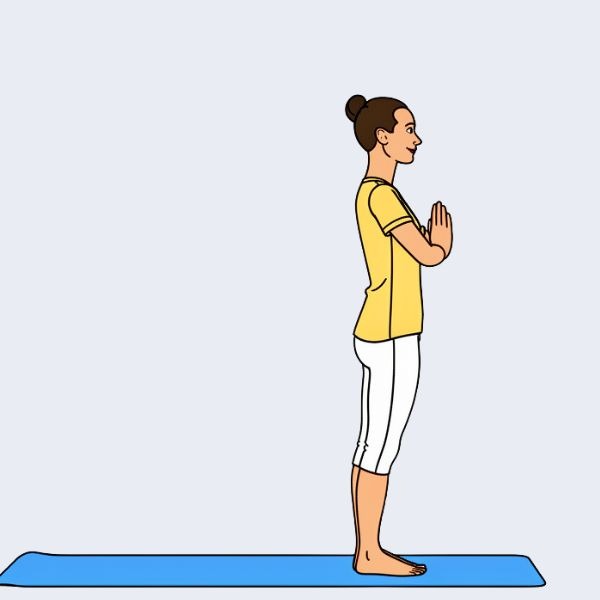
Stand erect with the feet together and the body relaxed but upright. Exhale and bring the palms together in front of the chest. This is Prayer Position and establishes a sense of steadiness, calm, and inner centering.
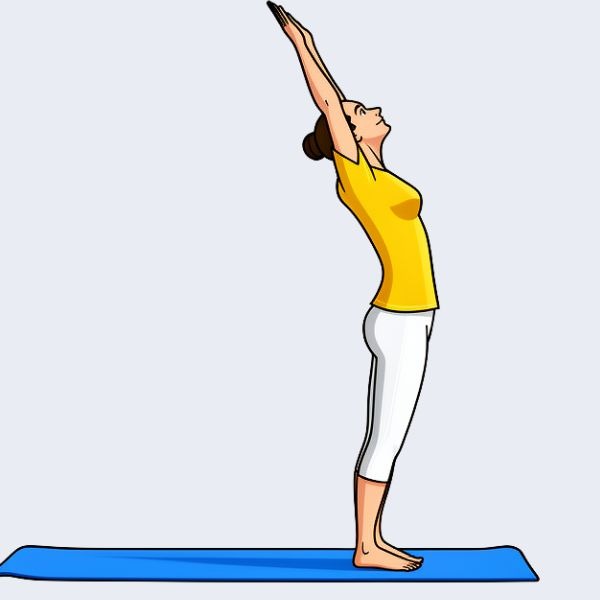
Inhale and stretch the arms up alongside the ears. Arch back gently from the waist and chest, keeping the knees straight and the neck relaxed. The front of the body opens and the chest lifts.
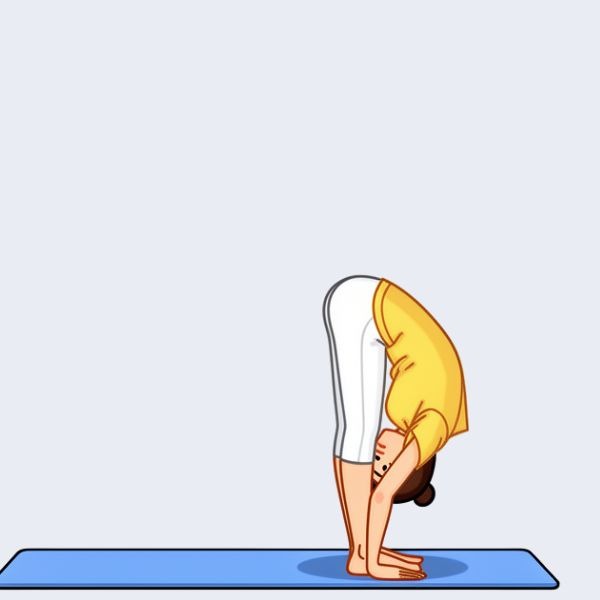
Exhale and fold forward from the waist, bringing the hands down beside the feet. Keep the hips as high as possible. If needed, bend the knees slightly so the body can soften into the stretch without strain.
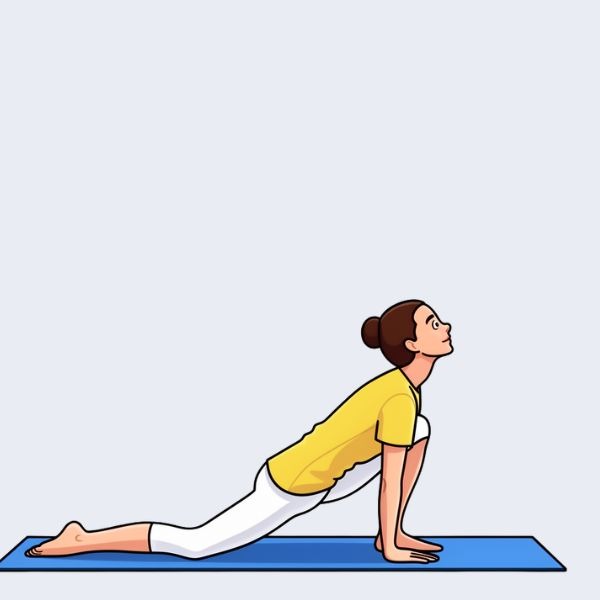
Inhale and stretch one leg back as far as possible, lowering that knee to the floor. Keep the front knee between the arms and look upward. The hips open and the chest broadens.
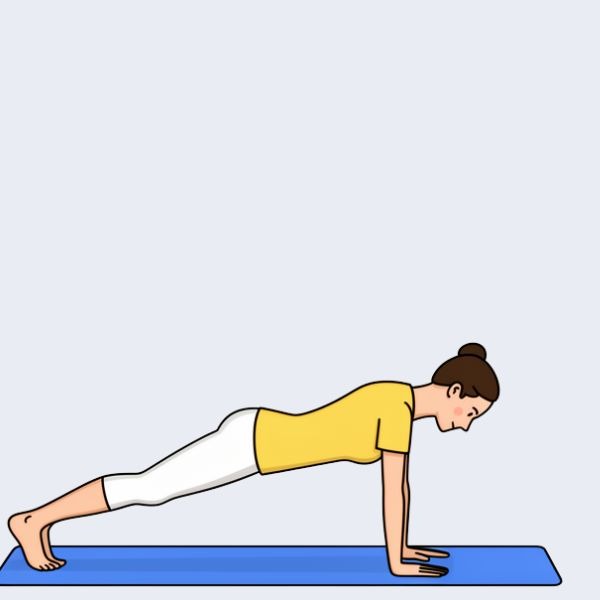
Retain the breath and bring the other leg back beside the first. The body forms one straight line, supported by hands and toes. The head, neck, back, hips, and legs stay aligned.
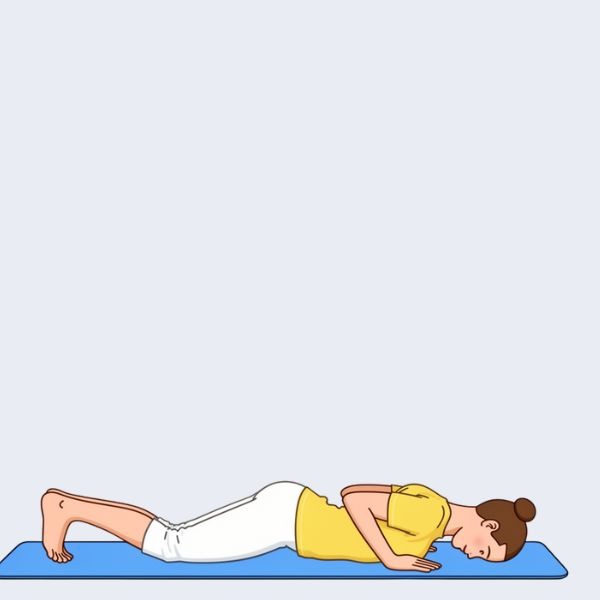
Exhale and lower the knees, chest, and forehead to the floor while keeping the hips raised. This unusual position develops strength in the shoulders, arms, and chest and prepares the transition into Cobra.
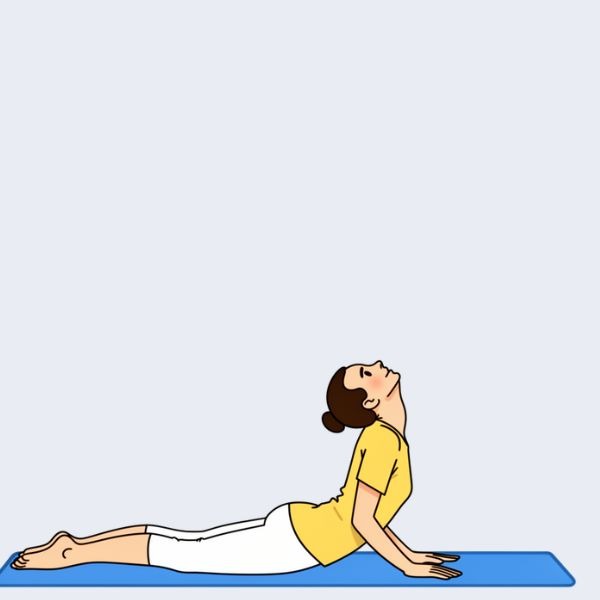
Inhale and slide the body forward until the hips come down. Lift the head and chest into Cobra, keeping the shoulders down and back, the elbows slightly bent, and the neck free of tension.
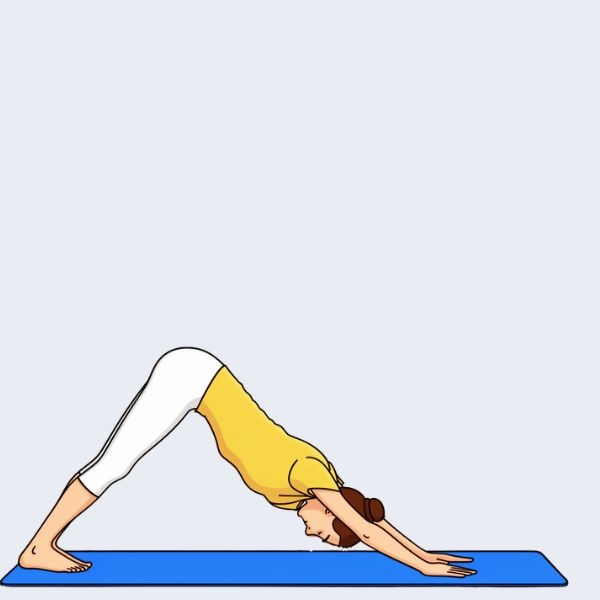
Exhale, tuck the toes under, and lift the hips high. Straighten the arms and legs as much as possible, drop the head between the arms, and stretch the heels toward the floor. This creates a strong lengthening through the whole back of the body. This position is often called "Inverted V".
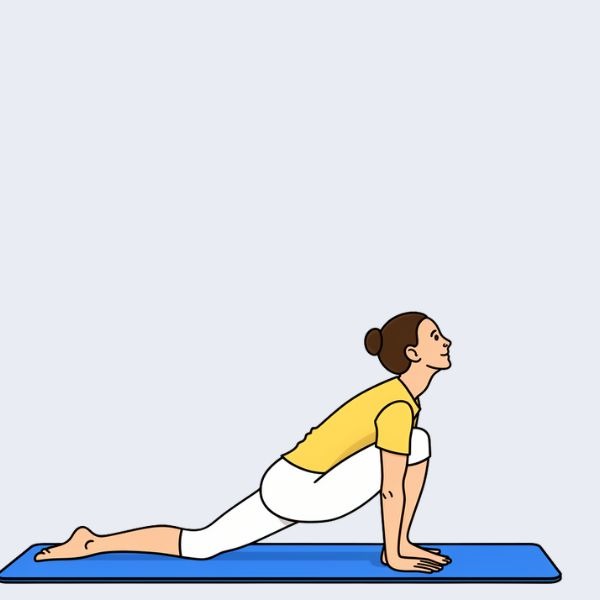
Inhale and step the same leg forward between the hands, lowering the back knee to the floor. Look up and keep the hips level. This mirrors step 4.

Exhale and bring the back foot forward beside the other. Bend down from the waist, bringing the head in toward the knees and keeping the hands by the feet.

Inhale and rise up, sweeping the arms forward and then overhead. Stretch up and arch back gently, opening the chest once more.
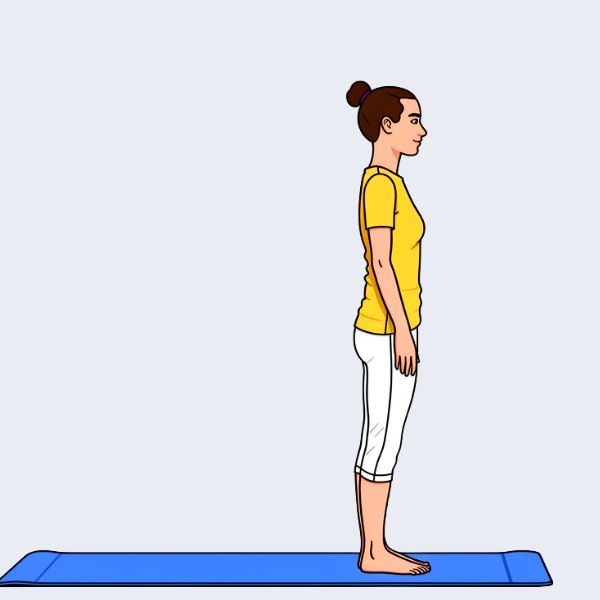
Exhale and return to an upright position, lowering the arms by the sides. Then begin the next sequence, changing sides so the opposite leg leads.
Once the Sun Salutation poses are familiar, the breathing pattern becomes an essential part of the practice:
Exhale in Prayer Position. Inhale as the arms rise and the body arches back. Exhale into the forward bend. Inhale as one leg stretches back. Hold the breath in the straight body position. Exhale as knees, chest, and forehead come down. Inhale into Cobra. Exhale into the Inverted V. Inhale as the foot steps forward. Exhale into the forward bend. Inhale as the body rises and arches back. Exhale as you return to standing.
This rhythm gives Sun Salutation its flowing, meditative quality.
It is helpful to keep the hands in one place from Step 3 through to Step 10 if possible. The body should move with steadiness rather than speed. In the backward bends, the arms stay alongside the ears and the chest opens without collapsing into the lower back. In the forward bends, the hips lift high and the knees may bend if necessary. In the lunging positions, the hips stay level and the chest stays open. In Cobra, the shoulders remain relaxed. In the Inverted V, the hips lift strongly upward and back.
The sequence should feel smooth and balanced, not rushed or forced.
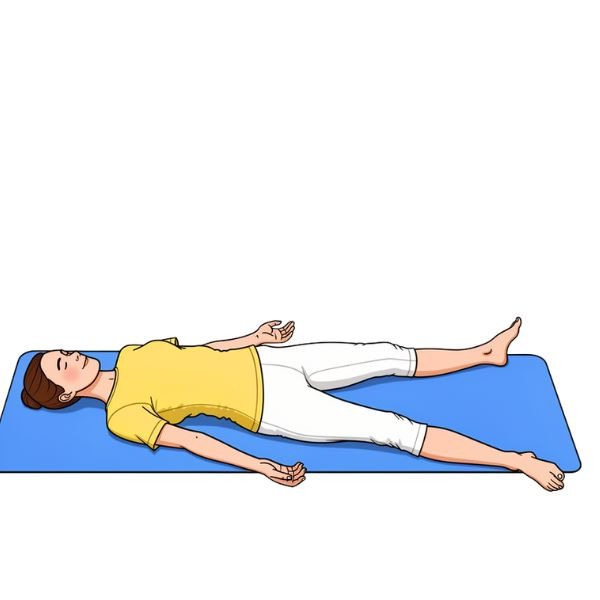
After completing your rounds of Sun Salutation, it is important to rest in Corpse Pose (Savasana). This allows the breath to settle, the heartbeat to calm, and the effects of the practice to be absorbed. Even a short relaxation at the end helps the body release effort and gives the mind a chance to become quiet and refreshed.
Sun Salutation is especially beneficial for beginners, for stiff people, and for older practitioners, because it helps the body gradually gain flexibility. It is not necessary to perform it perfectly from the start. If the hands do not reach the floor comfortably, the knees can bend. If stepping the foot all the way forward is difficult, the back knee can come down first before adjusting the front foot into place. If the sixth position feels awkward, it can be practiced separately until it becomes familiar.
For beginners, it is not necessary to force one full movement into one breath at first. It is better to move slowly and carefully, taking as many breaths as needed while learning the Sun Salutation positions. Once the sequence becomes familiar, movement and breathing can be more closely coordinated.
The most important thing in the beginning is to learn the sequence with care and patience.
A few rounds of Sun Salutation followed by relaxation can already have a refreshing and balancing effect. It is best to begin modestly and increase gradually. Start with 3 to 5 repetitions, and eventually build up to 6 to 12 cycles daily. Regularity matters more than intensity.
Sun Salutation is not merely a series of stretches. It is a synchronized movement of body, breath, and awareness. It opens the body, deepens the breath, sharpens concentration, and creates a state of relaxed attention.
Approach Sun Salutation gently, with attention rather than ambition. Let each movement follow the breath, and let each breath support the movement. With regular practice, these 12 simple positions become a complete and powerful way to awaken the body, steady the mind, and begin the day with clarity.