Yoga Breathing Exercises for Beginners: From Abdominal Breathing to Alternate Nostril Breathing
In yoga, breathing should feel pleasant and never stressful. When practising the yoga breathing exercises below, regularity and ease are more important than intensity. Start gently, breathe through the nose, and keep the breath slow and rhythmical. If strain appears, shorten the practice, soften the effort, and let your breathing return to a quiet, natural rhythm before continuing.
Practice setup
Begin in Corpse Pose (Savasana) for 2–3 minutes. Let the body settle and allow the breath to become quiet and natural.
Keep your practice simple and steady. Short sessions done consistently are more valuable than pushing.
Finish with Corpse Pose again. Lie still and feel the effects of the practice settle through the whole body.
Contents
Exercise 1: Abdominal Breathing (Foundation)
Abdominal breathing is the essential starting point in yoga. It trains you to breathe with the diaphragm and to use the lower, largest part of the lungs.
Why this comes first
It is a preparatory technique for all yogic breathing exercises.
It helps restore a more natural breathing pattern by relaxing unnecessary tension in the abdomen.
How to practice
Lie down in Corpse Pose (or sit comfortably with an upright spine).
Relax the abdominal muscles and let the belly be soft.
Breathe slowly and rhythmically, keeping your attention on the abdomen.
Feel the abdomen expand gently on inhalation and fall back on exhalation.
Continue for about 1 minute, then rest briefly.
Tip: Place both hands over your abdomen with the fingers spread, covering the area between the first rib and the pelvis, and feel the abdomen gently rise on inhalation and fall on exhalation.
Benefits of Abdominal Breathing
Abdominal breathing is the foundation because it restores a more natural, efficient pattern of breathing.
Helps you breathe more efficiently by encouraging diaphragmatic breathing and fuller ventilation of the lower lungs.
Releases tension in the abdomen and solar plexus area, which is often tightened by stress and contributes to shallow breathing.
Supports a calmer, steadier breath rhythm, making it an ideal starting point before other yogic breathing practices.
Builds the base for deeper practices, because it trains the essential movement pattern used in full yogic breathing and pranayama.
Exercise 2: Three-Part or Full Yogic Breathing (Basic Technique)
Full Yogic or three-part breathing is an exercise that encourages you to use all parts of the lungs – low, middle, and upper – without strain. When practising, keep the breath smooth and connected.
How to practice
Sit comfortably or lie in Corpse Pose.
Inhale in three stages:
Expand the abdomen
Expand the rib cage
Lift and expand the collarbone area
Exhale in stages:
Let the abdomen relax
Let the rib cage lower
Finish with a slight abdominal contraction to empty the lungs more completely
Repeat for a few rounds, keeping the breath gentle, quiet, and rhythmical.
Helpful rhythm: Proceed slowly enough that the three stages are clear, but not so slowly that you strain.
Benefits of Full Yogic Breathing
Develops fuller use of lung capacity by engaging abdominal, chest, and clavicular breathing in one smooth wave.
Improves oxygen intake through more complete ventilation.
Helps reduce stale air in the lungs when paired with complete exhalation, allowing a deeper, fresher inhalation.
Supports mental clarity and steadiness, especially helpful when you feel mentally tired or dull.
Encourages relaxation and balance, as the breath becomes smooth, rhythmical, and complete.
The yoga breathing exercise of Alternate Nostril Breathing or Anuloma Viloma should be comfortable and never stressful. Beginners should start with the simplest level and build gradually.
Hand positions (as a focus aid)
Vishnu Mudra (right hand)
Fold the index and middle fingers; use the thumb and ring finger to gently close the nostrils.
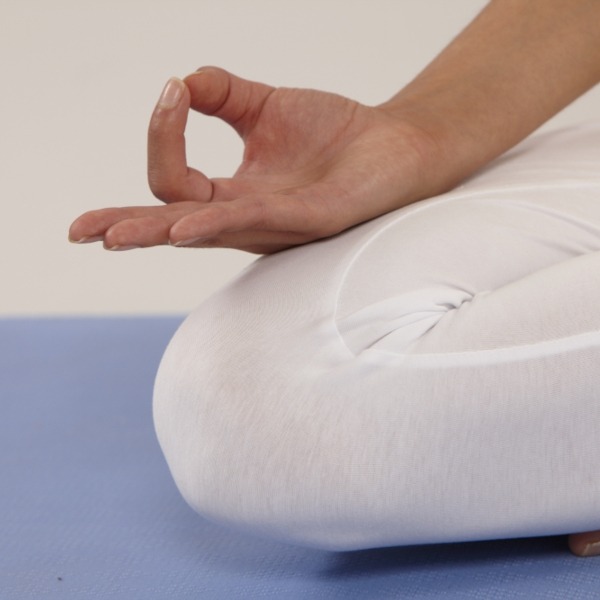
Chin Mudra (left hand)
Thumb and index finger touch lightly; other fingers extended and relaxed.
Sit upright and relaxed. Keep the shoulders soft and the face calm.
Variation 1: Single-nostril breathing (no retention)
Use Vishnu Mudra to gently close one nostril.
Inhale for 3 seconds through the open nostril.
Exhale for 6 seconds through the same nostril.
Complete several rounds, then switch and repeat on the other side.
Keep the breath smooth and quiet. If the ratio feels difficult, shorten it.
This simple version trains steadiness and comfort before adding anything more.
Variation 2: Alternate nostrils (inhale one side, exhale the other — no retention)
This is the next simple step after single-nostril breathing, and it’s still done without holding the breath.
Sit upright and relaxed. Form Vishnu Mudra with the right hand.
Close the right nostril with the thumb and inhale through the left for about 3 seconds.
Close the left nostril with the ring finger, open the right nostril, and exhale through the right for about 6 seconds.
Inhale through the right for about 3 seconds.
Switch again: close the right nostril, exhale through the left for about 6 seconds.
That completes one round. Repeat for several rounds, always keeping the breath pleasant and never stressful. If the counts feel too long, shorten them and keep the rhythm comfortable.
Benefits of Alternate Nostril Breathing
Alternate Nostril Breathing is valued as a balancing practice – steadying both energy and mind through a smooth, rhythmical breath.
Balances the nervous system, helping you feel calmer and more centered.
Encourages mental clarity and concentration, making it a supportive practice before meditation.
Helps correct shallow or irregular breathing habits by training a smoother, more even breath.
Supports a more balanced inner state by harmonizing the flow through the nostrils (often experienced as greater steadiness and emotional equilibrium).
Promotes relaxation, and can be especially helpful when practiced gently in the evening to settle the system for rest.
Continue to More Advanced Yogic Breathing Exercises
When these beginner practices in yogic breathing feel natural – steady breath, no strain, and a calm mind – you can progress to more advanced yogic breathing techniques, including Alternate Nostril Breathing with retention and practices such as Kapalabhati.
This site is registered on wpml.org as a development site. Switch to a production site key to remove this banner.