Bow Pose

Bow
Dhanurasana

the 12 Basic asanas

Bow

Bow Pose: An energizing backbend that supports spinal flexibility and digestion.

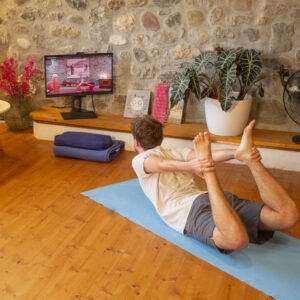
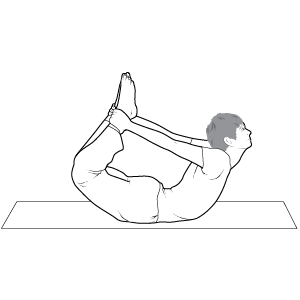
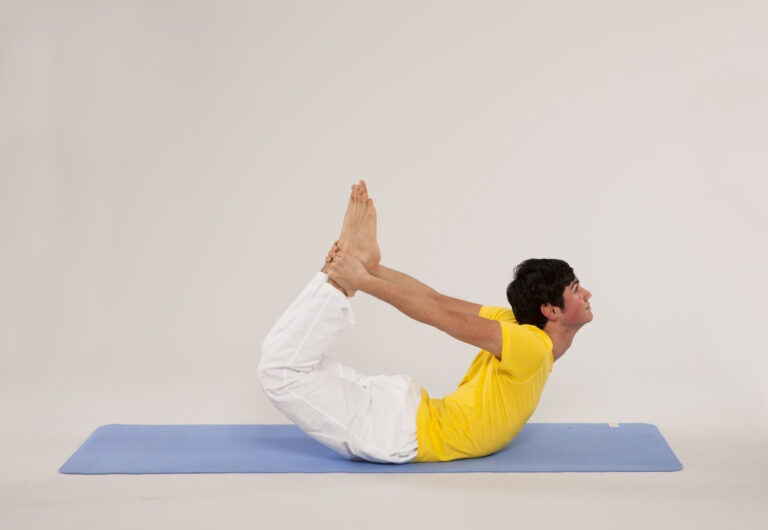
Bow Pose, or Dhanurasana, is a classical yoga posture that gives a full backward bend to the body. In this pose, the body takes the shape of a bow: the legs and spine form the bow itself, while the arms stretch like the bow string.

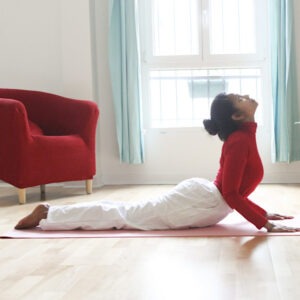
Bow combines the benefits of Cobra and Locust. It tones the muscles of the legs and back, opens the front of the body, and helps keep the spine strong and elastic.

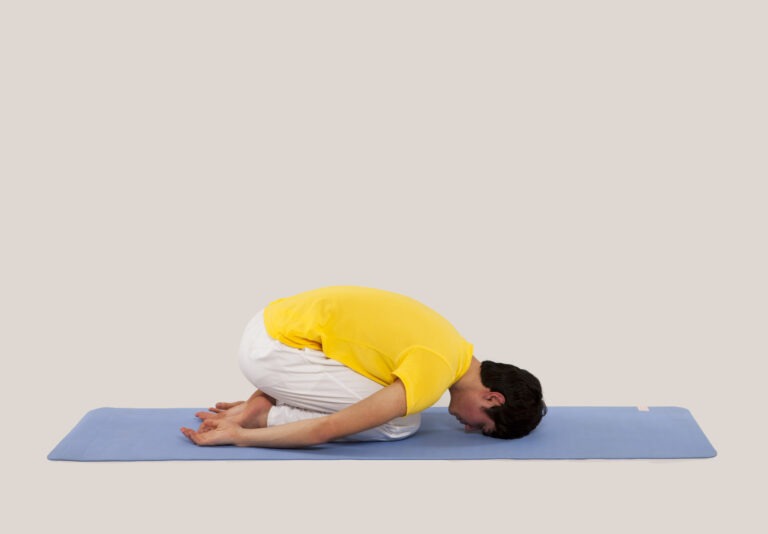
After practising Bow, relax in Child’s Pose for 8 breaths.

Contents

Benefits of Dhanurasana

Tones the muscles of the back

Maintains the elasticity of the whole spine

Counteracts kyphosis, or excessive curvature of the upper back

Strengthens the quadriceps muscles in the front of the thighs

Supports digestion

Relieves constipation

Energizes the female reproductive system

Counteracts mental sluggishness and laziness

Video Inspiration – Bow Pose

The Bow – Beginners

1

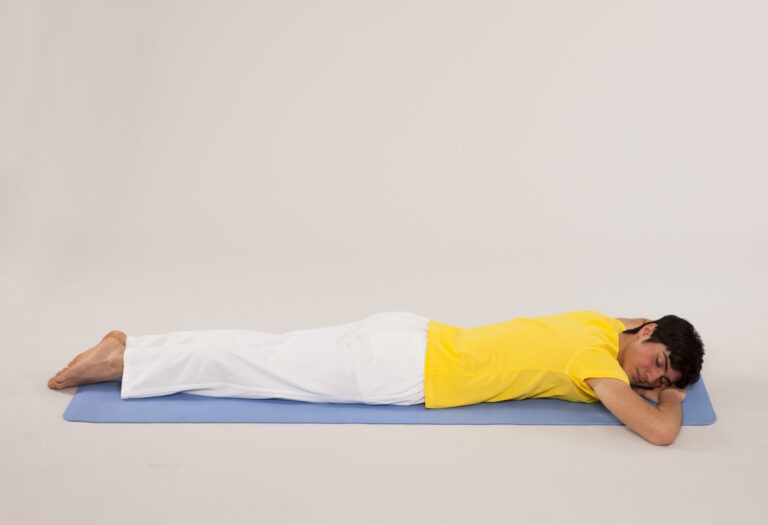
Lie on your abdomen

Lie on your abdomen with both legs and arms stretched out. Bend your right leg and catch hold of your right ankle with your right hand.

  • Relax the neck
  • Stretch the toes
  • Rest the forehead on the mat
2

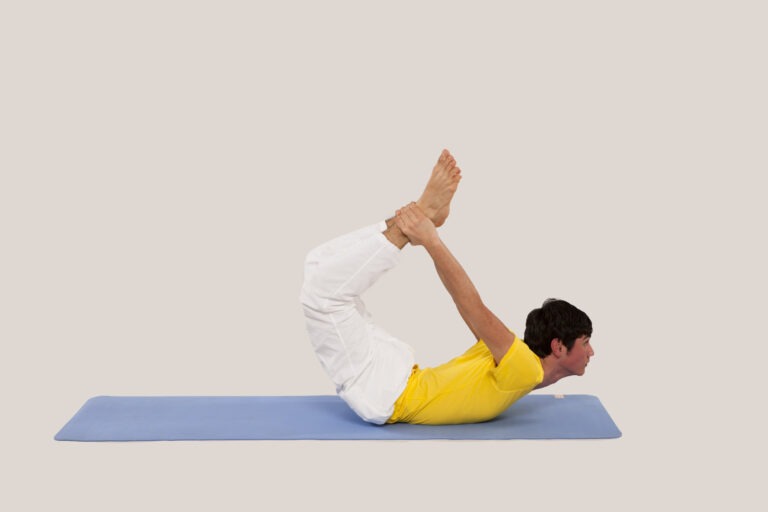
Lift your head and leg

With an inhalation, push your right leg up and lift your head. Hold for up to 5 breaths, then release on an exhalation. Repeat with the other leg. 

  • Keep the arm straight
  • Lift the head and contract the neck
  • Look up
  • Support the body with the hand
  • Raise the knee as high as possible
3

Rest

Relaxing on the abdomen

Relax for a few breaths on your front or in Child's Pose.

The Bow – Intermediate

1

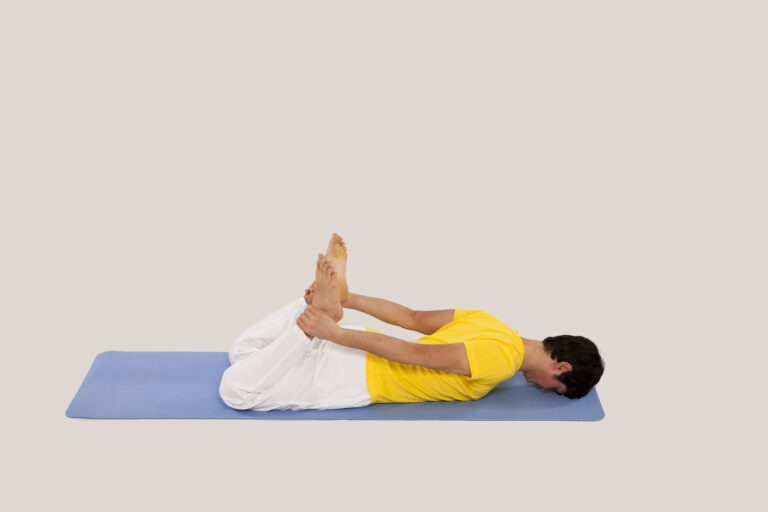
Lie on your abdomen

Preparation for the Bow Pose

Lie on your abdomen with your knees apart. Bend your legs and catch hold of your ankles.

  • Relax the toes
  • Keep the arms straight
  • Rest the forehead on the mat
2

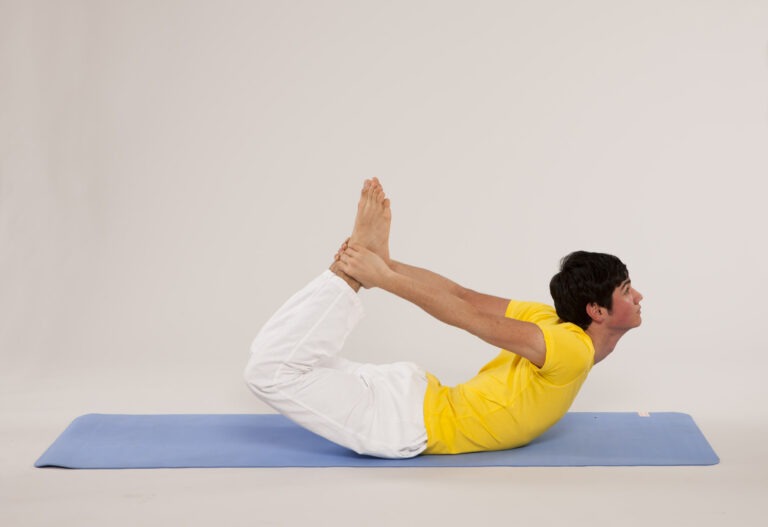
Come into full pose

Dhanurasana

To come into the full pose, on an inhalation, push your feet up until your knees come as high off the mat as possible. Lift your head and contract your neck. Hold for 3–6 breaths, then exhale, release your feet, and lower your knees and forehead back to the mat.

  • Keep the arms straight
  • Keep the shoulders away from the ears
3

Rest

Relaxing on the abdomen

Relax for a few breaths on your front or in Child's Pose.

Rocking Bow – Intermediate

Bow variations like the one below bring complete flexibility to the shoulder joints, but require flexible hip and chest muscles. 

1

Lie on your abdomen

Preparation for the Bow Pose

Lie on your abdomen with your knees apart. Bend your legs and catch hold of your ankles.

  • Relax the toes
  • Keep the arms straight
  • Rest the forehead on the mat
2

Come into full pose

Dhanurasana

To come into the full pose, on an inhalation, push your feet up until your knees come as high off the mat as possible. Lift your head and contract your neck. Hold for 3–6 breaths, then exhale, release your feet, and lower your knees and forehead back to the mat.

  • Keep the arms straight
  • Keep the shoulders away from the ears
3

Rock backwards

Bow Pose / Dhanurasana

With a strong inhalation, strongly contract your neck and your upper back muscles. Lift your head and chest as high as you can. This creates a backwards rocking motion, shifting your weight from your abdomen to your thighs.

  • Keep the elbows extended
  • Look up
  • Lift the chest
  • Weight comes onto the thighs
4

Rock forwards

Rocking Bow pose

With a strong exhalation, use your arms and shoulders to pull your body forwards, moving your weight onto your abdomen and chest. Rock forwards and back 3-6 times, then exhale, release your feet, and lower your knees and forehead back to the mat.

  • Lift the legs high
  • Shift the weight away from the hips
  • Keep the arms straight
5

Rest

Child's Pose

After practising, stretch back into Child's Pose to relax.

Recommended Reading

This site is registered on wpml.org as a development site. Switch to a production site key to remove this banner.