Corpse Pose
Home > Yoga > Relaxation > Corpse Pose
Corpse Pose: The classic relaxation pose.
Savasana, or Corpse Pose, is the classic yoga relaxation pose. Though outwardly simple, it is one of the most subtle and important practices. In Savasana, the body gradually lets go of tension, the breath becomes slow and quiet, and the mind settles into stillness. Practiced with awareness, it brings rest, balance, and renewal to the whole being.
Savasana is the posture of complete rest. You lie flat on your back, symmetrically arranged, and allow the whole body to become quiet. In this position, the muscles can release, the breath can settle, and the nervous system can recover.
In the Sivananda Yoga tradition, Savasana is not reserved only for the end of practice. It is woven throughout the class. It is practiced:
For this reason, Savasana is much more than simply lying down. It is a conscious practice of letting go.
Savasana has profound effects on body and mind. Practiced regularly, it helps to restore balance on physical, mental, and deeper inner levels.
Shavasana can help:
When the body is relaxed, the mind also begins to relax. As unnecessary effort falls away, energy is no longer wasted. This is one of the reasons Savasana is such an essential part of yoga practice.
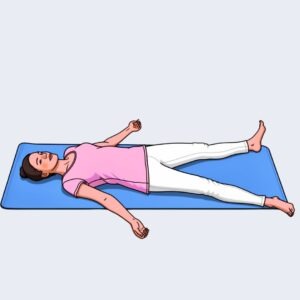
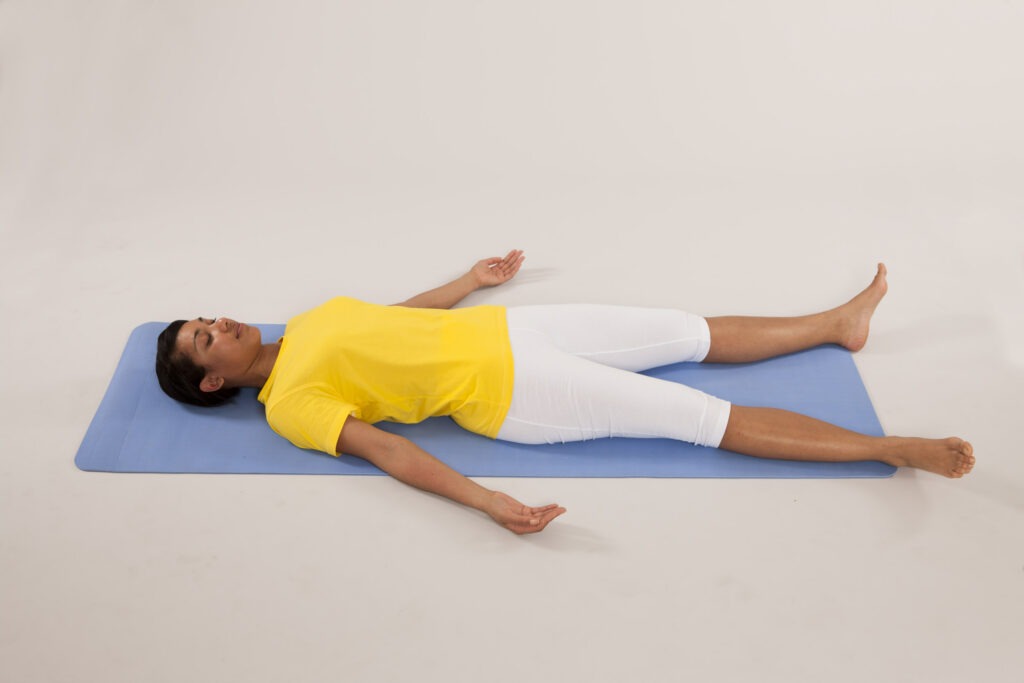
Lie on your back with the body arranged symmetrically. Let the feet be comfortably apart and allow the toes to turn outward. Rest the arms slightly away from the body with the palms turned upward.
Rotate the legs in and out, then let them fall gently outward. Do the same with the arms. Turn the head softly from side to side and bring it back to the center so that the spine feels aligned. Stretch yourself out as though someone were gently pulling the head away from the feet, the shoulders down away from the neck, and the legs down away from the pelvis.
Then let the whole body rest.
Close the eyes and feel the weight of the body sinking into the floor.
Once you are settled in the pose, begin to breathe deeply and slowly from the abdomen. Feel the abdomen rise as you inhale and fall as you exhale. Let the breath become quiet, steady, and rhythmical. In a short Savasana between poses, this gentle abdominal breathing is the main practice. It helps the body release tension, quiets the nerves, and allows the mind to become calm. With each exhalation, feel yourself sinking a little deeper into the pose. Remain still, breathe quietly, and let the breath carry the whole system into rest.
At the end of the class, Savasana is practiced more fully as Final Relaxation. This is one of the most important parts of the yoga session. Here, the body, mind and spirit are led gradually into deeper rest.
In Final Relaxation, the practice unfolds in stages:
This deeper process helps reduce energy loss, remove stress, and leave the whole being refreshed.
Final Relaxation
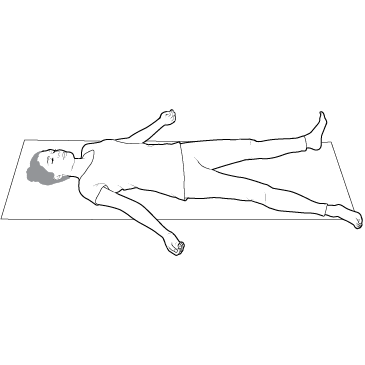
In Final Relaxation, you relax each part of the body in turn. But in order to experience relaxation, you must first experience tension. Working up from the feet, first tense and lift each part, then drop it down. Do not place it down gently – let it drop.
Feet and legs
Lift your right foot 10 cm (4 inches) off the floor. Tense the leg, hold, then let it drop. Repeat on the other side.
Hands and arms
Raise both arms 10 cm (4 inches) off the mat. Make fists, tense the arms, then drop.
Buttocks
Clench your buttocks tightly together, lift the hips a little way off the floor, and hold. Relax and drop them down.
Chest
Tense and lift up the back and chest, keeping the hips and head on the floor. Relax and drop them down.
Shoulders
Lift your shoulders and hunch them up tightly around the neck. Let them drop, relaxed. Now pull each arm, in turn, down alongside the body, and relax.
Face
Squeeze the muscles of your face tightly together, hold, then relax. Next, stick your tongue out, look upwards to your forehead, hold, then relax.
Head
Tuck in the chin slightly and roll the head gently from side to side. Find a comfortable position in the centre for the head to lie, and then relax.
Final Relaxation
Autosuggestion is an extension of the physical relaxation already begun through tensing and releasing the muscles. Having first experienced the difference between tension and relaxation in each part of the body, you now use the mind consciously to deepen that relaxation. Just as the mind ordinarily instructs the muscles to tense and contract, it now sends them the message to relax.
Visualize the body in your mind’s eye and repeat a simple formula inwardly, part by part:
I’m relaxing the feet, I’m relaxing the feet. The feet are relaxed.
I’m relaxing the calves, I’m relaxing the calves. The calves are relaxed.
Continue in this way through the whole body. Then include the internal organs as well. Visualize each area clearly, breathe slowly, and send the command to relax one organ at a time: the kidneys, liver, intestines, bladder, pancreas, stomach, heart, lungs, and brain. Through the subconscious mind, the internal organs also receive the message to relax.
Final Relaxation
Continue breathing deeply and slowly from the abdomen. Feel how the abdomen swells and falls. Let the inhalation and exhalation become smooth and rhythmical, without strain.
As the breath slows down, the mind also slows down. Watch the flow of air moving in and out and rest the mind on the breath. If the mind wanders, gently bring it back. In this way, the breath becomes the means of relaxing the mind. The body is still, the nerves are soothed, and the mind gradually becomes calm and detached.
Final Relaxation
Physical and mental relaxation are not complete until there is also spiritual relaxation. So long as we remain identified only with the body and mind, there will still be fear, worry, anger, and sorrow. Spiritual relaxation means becoming detached, taking the position of a witness, and resting in the deeper peace within. As the body lies still and the breath becomes quiet, let go of identification with passing sensations and thoughts. Become aware of a still, peaceful presence behind them. In this way, relaxation deepens beyond the physical and mental levels and leads toward inner peace.
A short Savasana at the beginning of class or between poses may last only a brief time. Final Relaxation at the end of class is longer and should be given proper time. After a session of asanas, at least 10 minutes is recommended, and longer is often beneficial.
Do not come out of the pose abruptly.
First, deepen the breath slightly. Then gently move the fingers and toes. Let awareness return to the body. If it feels natural, stretch the whole body.
When you are ready, roll softly to one side or come up slowly. Try to keep some of the quietness with you.
Because it is practiced at the beginning of class, between poses, and in Final Relaxation,
Savasana forms a foundation of yoga practice in the Sivananda tradition. It teaches the art of conscious rest. Through it, the body learns to release effort, the breath becomes steady, and the mind grows quiet.
In this way, Savasana is not merely a pause in the practice. It is itself a practice of deep importance.
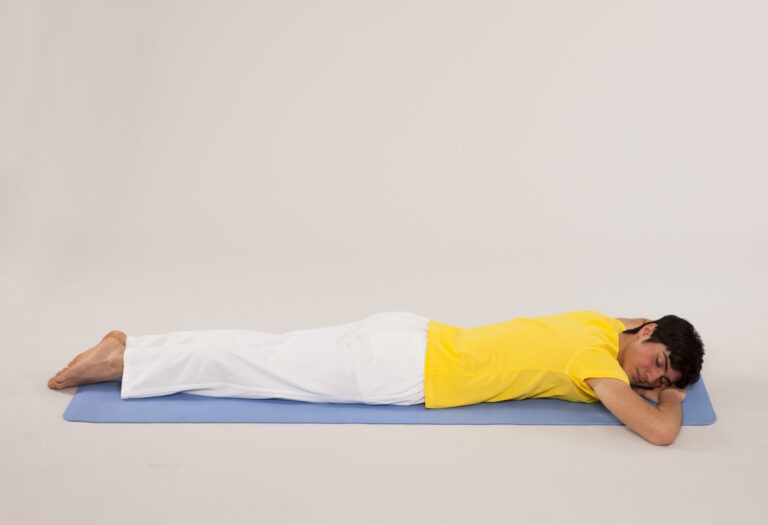
While Savasana is the classical pose for deep and final relaxation, the frontal corpse pose is used following postures practiced on the abdomen.
Lie down on your front with the legs slightly apart, the toes touching, and the heels falling outward. Make a pillow with your hands and rest the head comfortably on them. Lengthen the whole body, then gently tense and relax the muscles. With each exhalation, feel the body sinking into the floor.
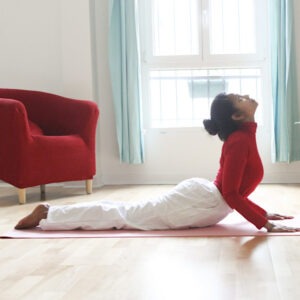
This pose is used after asanas practiced on the abdomen, such as Cobra or Bow, and the head should be placed alternately to each side.
This pose may be practiced after asanas such as Cobra or Bow, alternating the head from one side to the other after each pose.